Winter Squishy Care: Why Your NeeDoh Gets Hard in the Cold (and How to Fix It Safely)
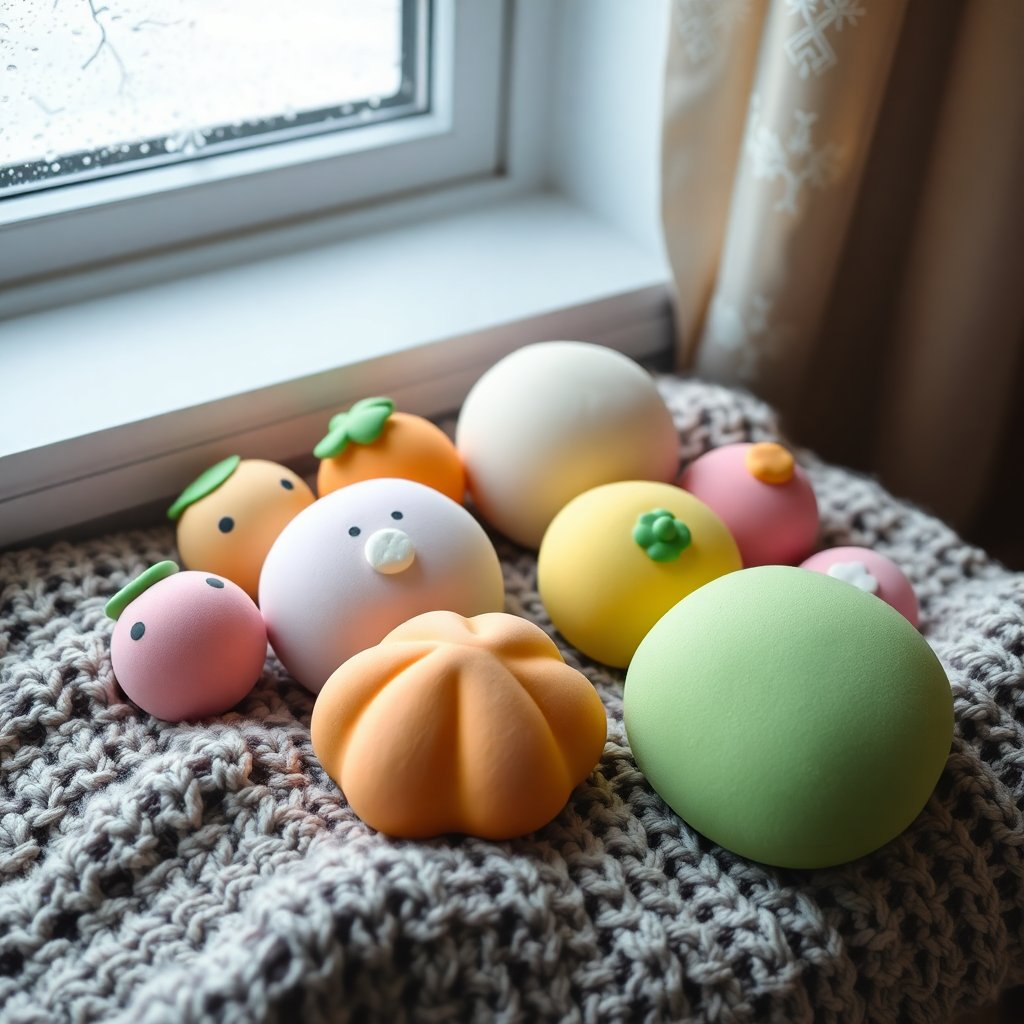
The first cold snap of the year always brings the same message to squishy group chats: "Is my NeeDoh broken?" A squish that was pillowy in September suddenly feels like a stress ball made of clay. A slow-rise foam bun that used to puff back up in a few seconds now takes forever. A dumpling that rode home in a freezing car feels oddly firm and tight.
The good news is that this is almost always temporary. Most squishies are simply reacting to temperature, and they come back to normal once they warm up the right way. The not-so-good news is that the internet's favorite "fix" for a stiff squishy is heat, and heat is exactly how squishies get ruined or become unsafe.
This guide explains what is happening inside your squishies in winter, how to bring them back gently, and how to store a collection through the cold months.
Affiliate disclosure: some links below are Amazon affiliate links, and Squishy Scene may earn a small commission if you buy through them, at no extra cost to you.
Why Squishies Change in Cold Weather
Different squishies are made from different materials, and each one reacts to cold a little differently. Understanding which type you have makes it much easier to know what to expect.
Gel and Dough-Filled Squishes (NeeDoh-Style)
NeeDoh and similar sensory squishes from brands like Schylling use a soft, dough-like filling inside a stretchy outer skin. Fillings like these tend to get thicker and stiffer as they cool, a bit like honey or butter straight out of the fridge. The skin can also feel tighter and less stretchy when it is cold.
The result is a squish that feels firmer, rebounds more slowly, or resists stretching. That is normal behavior, not damage. Once the toy returns to normal room temperature, it usually goes right back to its familiar feel.
Slow-Rise Foam Squishies
Classic kawaii foam squishies, like bread, buns, and cakes, are made from polyurethane foam. Cold air makes foam less flexible, so it compresses and recovers more slowly. Some collectors actually like this effect because it exaggerates the slow-rise, but extremely cold foam can be more prone to tearing if you squeeze it hard while it is stiff.
TPR and Silicone Squishies
Many farmers-market fruit squishies and mochi animals use TPR (thermoplastic rubber) or silicone. These materials tend to handle temperature swings better than foam or gel, though TPR can firm up somewhat in the cold. Thermoplastic elastomers as a material class are known to soften with heat and stiffen when cooled, which is why a TPR peach left in a freezing car can feel a little rubbery until it warms.
Plush Squishies
Plush squishies, including many dumpling and bao designs, are the least affected. Their stuffing may feel a little denser when cold, but they generally bounce back quickly once indoors.
The Big Rule: Never Microwave a Squishy
When a squishy goes stiff, the tempting shortcut is heat. Social media has pushed "microwave your NeeDoh" videos for a while, and it is a genuinely bad idea. Microwaves heat unevenly, and gel or dough fillings can develop extremely hot spots inside a skin that feels only warm on the outside. That can burn hands and mouths, and it can also rupture the toy.
We covered this in detail in our guide to whether NeeDohs are safe to microwave, but the short version is simple: no microwaves, no ovens, no hair dryers pointed at a squishy, no hot radiators, and no boiling water.
Heat damage also tends to be permanent. A foam squishy can scorch or shrink, a TPR toy can warp or go tacky, and a gel squish can leak. Cold stiffness, by comparison, almost always reverses on its own.
How to Safely Bring a Cold Squishy Back to Normal
Let it come back to room temperature. This is the best fix by far. Bring the squishy inside, set it on a shelf away from direct heat, and give it an hour or two. Most squishies feel normal again by the time they have fully warmed through.
Warm it with your hands. Holding and gently rolling a squishy in your palms warms it slowly and evenly. This is also the most satisfying fix, since it is basically just playing with it. Avoid hard stretching until it has softened.
Use body-warm, not hot. Tucking a squish into a jacket pocket on the way home is fine. Your body heat is gentle enough to be safe.
Be patient with foam. Very cold foam squishies should be allowed to warm up before any serious squeezing, because stiff foam is more likely to tear.
Do not force a stretch. Pulling hard on a cold, tight squish skin is one of the easiest ways to cause a split. Wait until it feels supple again.
When Stiffness Is Not About the Cold
If your squishy stays firm even after it has been at room temperature for a day, something else may be going on:
- Age: Some fillings can change texture over long periods, especially with heavy daily use.
- Drying out: A pinhole leak can let the filling slowly change consistency.
- Fake or low-quality product: Knockoff squishes often use cheaper fillings that do not hold their texture. Our guide on how to spot fake squishies walks through the tells.
- Past heat exposure: A squishy that was microwaved or left in a hot car in summer may have permanently changed.
If a squishy is leaking, sticky in a new way, or smells off, it is time to retire it rather than try to save it.
Storing Your Squishy Collection Through Winter
Winter care is mostly about avoiding big temperature swings and keeping squishies away from both cold windows and hot heaters.
Avoid windowsills. Windows can get very cold at night and then warm up in afternoon sun. That daily swing is hard on foam and TPR.
Keep them away from heaters and radiators. Space heaters and radiators are the biggest winter heat risk for squishies.
Use closed containers for display. Clear bins or display boxes help with dust and buffer temperature changes. Our guide on how to display and store squishies has plenty of setup ideas.
→ Shop clear stackable display boxes on Amazon
Do not store squishies in the garage or car. Unheated spaces can drop well below freezing. Repeated freezing and thawing is far harder on squishies than a single cold day.
Store foam squishies uncompressed. Squashing foam into a tight drawer, especially when cold, can leave permanent dents.
Travel and Cold-Weather Outings
Winter outings, from holiday shopping to school drop-off, often mean squishies spend time in cold cars and backpacks.
- Keep them in an inner pocket rather than an outer backpack pouch.
- Use a soft pouch or small bag to give them a little insulation.
- Bring them inside with you instead of leaving them in the car overnight.
- Choose tougher squishies for travel. Silicone and TPR handle temperature swings better than foam or gel.
→ Shop small zippered toy pouches on Amazon
Winter-Friendly Squishies for Gifting
If you are shopping ahead of the holidays and expect the squishy to travel in cold weather, consider durability as well as cuteness:
- Silicone and TPR squishies hold up well in temperature swings and wipe clean easily.
- Plush squishies are cozy, winter-appropriate, and not very temperature-sensitive.
- Gel squishes like NeeDoh are still great gifts, but tell the recipient that a firm feel after being out in the cold is normal.
→ Shop NeeDoh sensory squishes on Amazon
A Quick Safety Note for Parents
Squishies are toys, and cold weather does not change their basic safety guidelines. Follow the age grading on the packaging, check toys regularly for tears or leaks, and take any damaged squishy away from young children. A squishy that has split open can expose filling or small foam pieces that are not meant to be handled or chewed.
The Bottom Line
A stiff squishy in November is usually just a cold squishy. Let it warm up slowly at room temperature or in your hands, skip every heat-based "hack," and store your collection away from windows, heaters, cars, and garages. With a little patience, your favorite squishes will feel exactly like themselves again, all winter long.
Squishy Scene is an Amazon Associate and earns from qualifying purchases. This article contains affiliate links; if you buy through them we may earn a small commission at no additional cost to you.
More to squish
More Squishy Guides
Reviews, restock intel, and the squishies worth your money.