How to Clean Squishies: Safe Ways to De-Stick, Deodorize, and Refresh Every Type
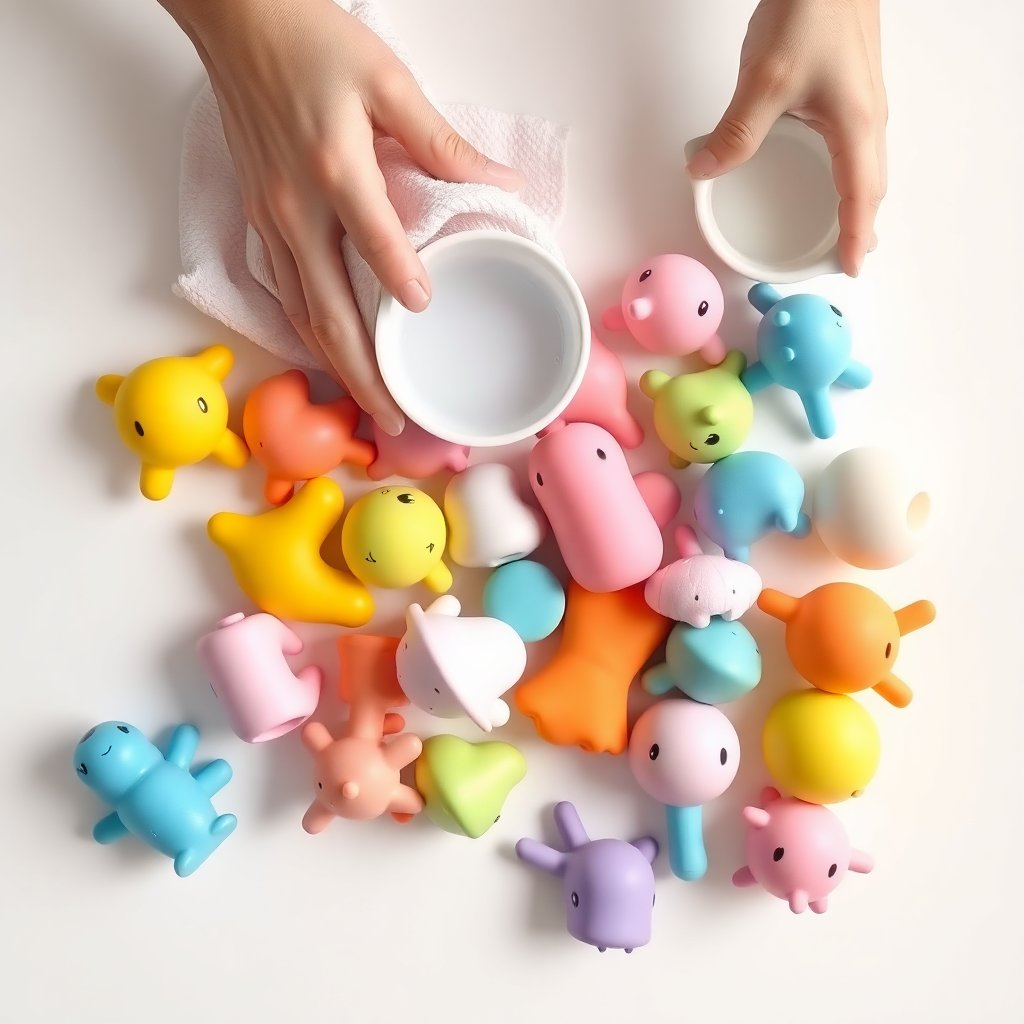
Squishies live hard lives. They get squeezed with snack-covered fingers, stuffed into backpacks, dropped on playground mulch, and left on sunny windowsills until the surface turns tacky. Over a few months even a beloved squishy can go sticky, dusty, or faintly funky, and the internet is full of bad advice that will melt, crack, or permanently stain it. This guide sorts the real methods by material, because a silicone NeeDoh, a slow-rise foam bun, and a plush blind-box character each need a completely different approach.
Affiliate disclosure: some links below are Amazon affiliate links, and Squishy Scene may earn a small commission if you buy through them, at no extra cost to you.
First, Figure Out What Your Squishy Is Made Of
Cleaning the wrong way is how most squishies die, so start by identifying the material. There are three broad families, and you can usually tell by touch.
Polyurethane (PU) foam is the classic slow-rise squishy: the bread loaves, buns, and animals that slowly puff back up after you squeeze them. They feel soft and slightly spongy, and they are the most fragile to clean because water soaks straight into the foam.
Silicone and TPR covers most fidget-style squishes, including NeeDoh-type stress balls, mochi squishies, and bubble poppers. These feel rubbery, dense, and non-absorbent. They are the easiest to clean and the most forgiving.
Plush and fabric squishies, like the soft Squishmallows-style characters and many blind-box plushies, are basically stuffed toys with a squeezable fill. They need gentle laundering, not scrubbing.
If you are not sure which foam squishy you own, press firmly and watch how it recovers. A slow, creeping rebound means PU foam. A fast snap-back usually means silicone or TPR. When in doubt, treat it as the most fragile option and spot-test first.
Why Squishies Get Sticky (and How to Fix It)
The single most common squishy complaint is the dreaded tacky surface. That stickiness almost always comes from one of three causes: a breakdown of the outer coating from heat and UV light, plasticizers migrating to the surface over time, or a film of dust, skin oil, and sugar that has bonded into a grimy layer. Heat is the big accelerator, which is one reason you should never try to warm or microwave a squishy, something we cover in detail in our NeeDoh microwave safety warning.
For a sticky silicone or TPR squishy, the fix is straightforward. Wash it in lukewarm water with a drop of mild dish soap, rub the whole surface with your fingers, and rinse. If it is still tacky, make a loose paste of baking soda and water, massage it over the surface, let it sit for a few minutes, then rinse and air-dry completely. Baking soda lifts the oily film without the harsh solvents that degrade rubber. A soft microfiber cleaning cloth set on Amazon makes the buffing step much faster and will not shed lint the way paper towels do.
For a sticky foam squishy, you have far less room for error, because you cannot soak it. Lightly dampen a cloth, add the tiniest amount of soap, and wipe the surface in sections, then wipe again with a clean damp cloth and press it dry with a towel. Some collectors dust a reclaimed-but-still-slightly-tacky foam squishy with a very thin layer of cornstarch or baby powder to kill the last of the stick, but use a whisper of it, because caked powder looks worse than the original tack. Honestly, if a foam squishy has gone deeply gummy and started to crumble, it has reached the end of its life and no amount of cleaning will bring it back.
Cleaning Silicone and Fidget Squishies
Silicone and TPR squishies are the workhorses of any collection, and the good news is you can clean them almost like dishes. For routine cleaning:
- Lukewarm water and mild soap. Skip hot water, which can warp or soften some blends. A drop of gentle dish soap or baby wash is plenty.
- Soft toothbrush for texture. NeeDoh-style balls with a mesh or beaded fill and mochi squishies with printed faces trap grime in their crevices. A soft brush gets in without scratching.
- Rinse thoroughly. Soap residue left behind actually attracts more dust, so rinse until the water runs clear.
- Air-dry fully before storing. Trapped moisture inside a textured squishy can turn into mildew, which is the source of a lot of mystery odors.
For the gel-filled or liquid-core squishies, inspect for any pinhole leaks before washing. Once the outer skin is punctured, water gets inside and the toy is done. A gentle, non-toxic toy cleaner is a smart buy if you are cleaning a whole bin at once, and a baby-safe toy cleaner spray on Amazon lets you wipe a batch of fidgets without soaking any of them. If your silicone picks are getting rough from daily handling, replacing a worn-out one is cheap, and our roundup of the best squishies on Amazon under $15 is a good place to start.
Washing Plush and Fabric Squishies
Plush squishies are the easiest to over-clean, because people throw them in a hot wash and pull out a matted, lumpy ghost of the original. Treat them like a delicate.
Surface spots come out with a cloth dampened in cold water and a dab of mild soap, blotted rather than rubbed. For most light grime, that is all you need.
A full wash should happen in cold water on the gentle cycle, with the squishy sealed inside a mesh laundry bag so the seams and any embroidered face are protected from the drum. A set of mesh laundry bags on Amazon is worth keeping on hand if your household has a shelf full of plush. Use a small amount of free-and-clear detergent, skip the fabric softener, which coats and flattens the fibers, and never use bleach.
Drying is where plush is won or lost. Air-dry flat, reshaping the toy with your hands while it is still damp, and keep it out of direct sun and off hot radiators. If you must use a dryer, use the no-heat air-fluff setting only. Once a plush squishy is bone dry, a quick brush with a soft bristle brush fluffs the pile back up.
Killing Odors in Blind-Box and Secondhand Squishies
New squishies, especially inexpensive blind-box finds, often arrive with a strong chemical or plastic smell, and secondhand ones can carry everything from musty-closet to cigarette odor. A smell that is sharp and chemical usually fades on its own; a smell that is musty or sour points to trapped moisture or mildew and needs real cleaning.
For the off-gassing plastic smell, airing the toy out is the most effective trick. Set it somewhere with good airflow but out of direct sunlight for a few days. To speed things up, seal the squishy in a container or zip bag with an open box of baking soda or a cup of dry rice for two or three days; both pull odor out of the surface without touching the toy. A box of baking soda on Amazon is the cheapest deodorizer you will ever buy and it doubles for the sticky-surface fix above.
For a musty or mildew smell, clean the squishy by its material type first, because the odor is a symptom of something living on it. Resist the urge to drown a smelly foam squishy in air freshener or perfume, which just layers a second smell on top of the first and can irritate a child's skin.
What Not to Do (These Ruin Squishies)
Plenty of popular hacks do more harm than good. Avoid these entirely:
- No heat. No microwaving, no hair dryers, no hot water baths, and no sunny windowsills to dry. Heat is the number one cause of melting, warping, and permanent stickiness.
- No harsh solvents. Acetone, nail polish remover, rubbing alcohol in quantity, and bleach will dissolve coatings, bleach colors, and crack rubber. Skip them.
- No dishwasher or washing machine for foam and silicone. The heat and agitation destroy them. Plush is the only family that tolerates a gentle machine wash, and only in a bag.
- No soaking foam. Waterlogged PU foam grows mildew from the inside and rarely dries evenly.
- No abrasive scrubbers. Scouring pads and stiff brushes scratch glossy silicone and tear foam.
When buying any toy for a young child, the surface you clean is only half the safety picture. The U.S. Consumer Product Safety Commission's toy safety guidance is a solid primer on age grading, choking hazards, and what to watch for, and it is worth a read before you hand any small squishy to a toddler. Nothing here is a substitute for the manufacturer's own care label, so follow that first whenever it exists.
A Simple Cleaning Routine That Keeps Squishies Alive Longer
The best cleaning is the kind you rarely have to do, and that comes down to storage and handling. Wash your hands before a long squeeze session, keep squishies out of direct sun, and wipe down the ones in heavy rotation every couple of weeks rather than waiting for a full grime layer to bond on. Collectors who keep their squishies boxed or shelved out of the light report far less stickiness over time, which is exactly why we put together a full guide to displaying and storing squishies that pairs perfectly with this one.
Match the method to the material, go gentle, let everything dry completely, and most squishies will stay soft, bright, and squeezable for years. And when one finally crosses the line from tacky to crumbling, let it go without guilt, because a squishy that is shedding foam is no longer a toy you want in a kid's hands.
Squishy Scene is an Amazon Associate and earns from qualifying purchases. This article contains affiliate links; if you buy through them we may earn a small commission at no additional cost to you.
More to squish
More Squishy Guides
Reviews, restock intel, and the squishies worth your money.